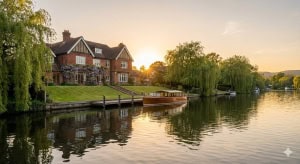

Most mornings for years, getting the children to school meant a short boat crossing before anyone reached a road. That’s not a detail we mention to sound unusual. It’s simply what a normal weekday looks like for a number of families living on the Thames islands around Shepperton, Wraysbury and Staines, and it’s the first thing prospective buyers need to understand properly before they fall for the setting.
Which Thames Islands Actually Have Homes on Them?
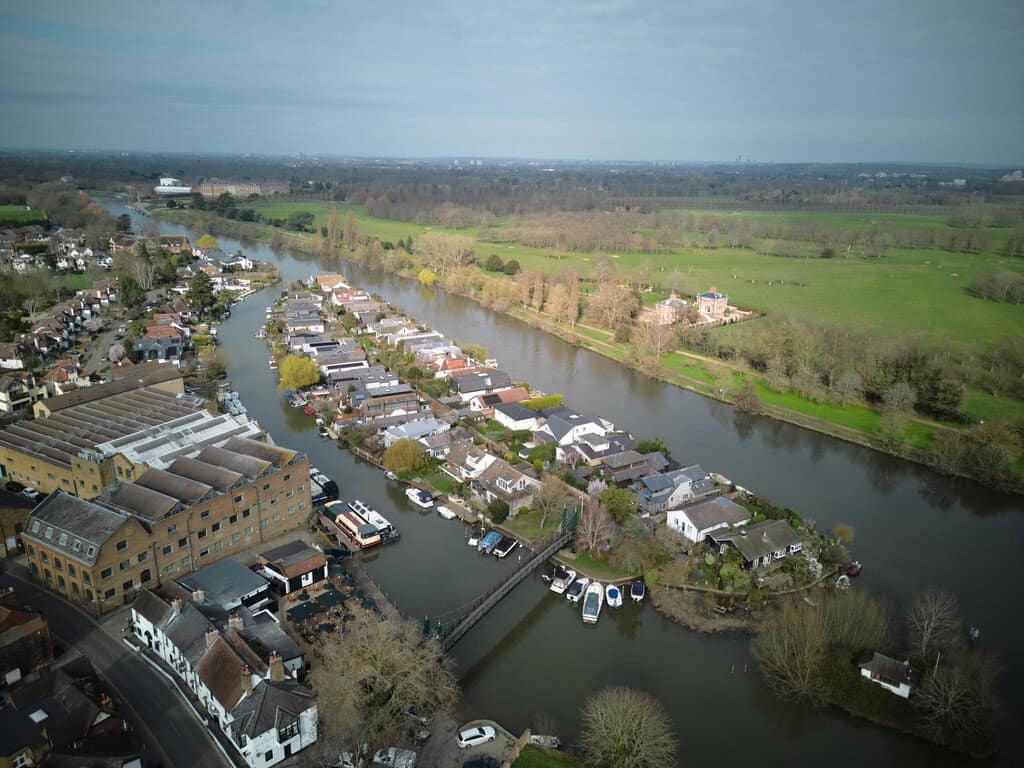
There’s a cluster of genuinely inhabited islands along this stretch of the river, including several around Shepperton and the well-known Pharaoh’s Island near Shepperton lock. Local lore has it that the island was gifted to Admiral Nelson after the Battle of the Nile in 1798, which is why most of its two dozen or so houses carry Egyptian names — Sphinx, Pyramid and Osiris among them. There’s no bridge to Pharaoh’s Island at all; residents and visitors get there by boat, full stop. Nearby Hamhaugh and Desborough islands have their own histories and their own mix of access arrangements, some by fixed footbridge, others only by private boat, so “island home” covers a wider range of day-to-day realities than it might first appear.
What Does Daily Life Actually Involve?
Commuting, shopping and deliveries all need a bit more planning than they would on a normal street, but with the right mindset, it’s entirely manageable. Our own children went through the village junior school and then the village secondary school while we lived this way, and the boat crossing became as routine as walking to a bus stop. You learn the tide, you learn the neighbours’ schedules, and you build in a few extra minutes rather than treating it as an obstacle. Deliveries take a bit more coordination; not every courier is used to leaving a parcel at a landing stage rather than a front door, so a quick call ahead usually solves it. Most residents settle into a rhythm within the first few months, and it stops feeling like an extra step long before that.
What Is the Community Actually Like?
This is where island living surprises people who expect isolation. In practice, island neighbours tend to know each other far better than a typical suburban street, simply because everyone shares the same crossing, the same tide-watching habits and the same practical problems. There’s a strong sense of looking out for one another that the ordinary high-street pace of life doesn’t really produce. Some islands run their own small calendar of shared events through the year, from a summer gathering on the island green to a raft race along the river, the kind of thing that simply wouldn’t happen on a standard street. Guests need a little more notice, since you can’t just have someone drop by on a whim without checking the crossing is straightforward, but most visitors find that part of the charm rather than a chore.
What’s Different About Viewing an Island Property?
A first viewing on an island can’t be arranged the way a normal house viewing can. Someone needs to bring you across, whether that’s the seller, a neighbour with a boat, or us, and the timing has to work around the tide and whoever’s available to make the crossing. It’s a small extra step, but it’s worth building in from the start rather than turning up on the towpath expecting to walk straight in. Buyers who come prepared for that, and who treat the crossing itself as part of getting a feel for the place rather than an inconvenience, tend to get a much better sense of whether the lifestyle suits them. We generally recommend allowing a little extra time on a first visit, so there’s no rush to make a decision on the doorstep before the boat needs to head back.
What Are the Practical Downsides?
Flooding is a real consideration, as it is anywhere close to the water, and insurance needs the same careful attention covered in our flood risk and insurance guide. Boat maintenance becomes a fact of life if a private crossing is involved, and access rights need to be absolutely clear before you commit. A verbal understanding about a shared landing stage or right of way is not something to rely on.
- Confirm access rights and any shared crossing arrangements in writing, not by assumption.
- Check flood height and insurance position as carefully as you would for any riverside property.
- Factor in boat maintenance and, if relevant, a mooring for a private crossing craft.
What’s Different About Buying an Island Home?
The conveyancing has extra layers that a standard suburban purchase doesn’t. Riparian rights, the legal rights and duties tied to owning land beside a watercourse, come up often on island purchases, particularly around banksides and access, and they’re genuinely easy for a generalist solicitor to get wrong. We always recommend a solicitor who handles riverside and island property regularly rather than occasionally; we go into the detail of why in our piece on riparian rights. Access arrangements, any shared bridge or landing agreements, and boat provision (if one comes with the sale) all need to be nailed down in the contract, not left as an informal understanding between neighbours.
Is Island Living Right for You?
It suits people drawn to a strong, small community and happy to plan a little more around water and tides. It suits families willing to build the crossing into the daily routine rather than resent it, and retired buyers who’d rather spend their time on the water than driving to it. It suits people less well if unplanned visitors, same-day deliveries or a five-minute walk to the shops matter more than the setting does.
Once someone has properly experienced island life, going back to a standard suburban plot rarely holds the same appeal. That’s been true of every island-owning client we’ve worked with over the years, and it was true of our own family too.
If island life sounds like what you’re after, register your requirements with us and we’ll flag island stock as it comes up, including through Absolute Prime for premium listings. Islands around Shepperton, Wraysbury and Staines are where most current stock sits, and it rarely stays on the market long.
Frequently asked questions
Is it hard to commute from a Thames island?
It takes more planning than a mainland commute, since access may involve a footbridge or a private boat crossing, but residents typically find it becomes routine within a short time.
What are riparian rights and why do they matter for island homes?
Riparian rights are the legal rights and duties that come with owning land beside a watercourse, covering things like access, banksides and moorings. They often affect island purchases and are best handled by a solicitor experienced in riverside conveyancing.
Is island living on the Thames good for families?
Many families find it works well, with a strong sense of community among island neighbours, though the daily routine (school runs, deliveries, guests) needs a bit more planning than on a standard street.
About the author
Robert King has spent 41 years in the property industry, most of it working with buyers and sellers in Surrey – Staines and Shepperton – and the surrounding Thames villages. He spent many years living on one of the Shepperton islands with his family, and now lives on the river in Staines. With a passion for water living, he holds an ICC (International Certificate of Competence) for driving leisure craft. Get in touch on 01784 557898 or info@absolute-homes.co.uk.