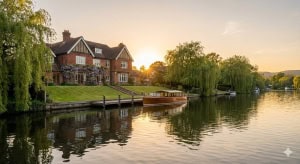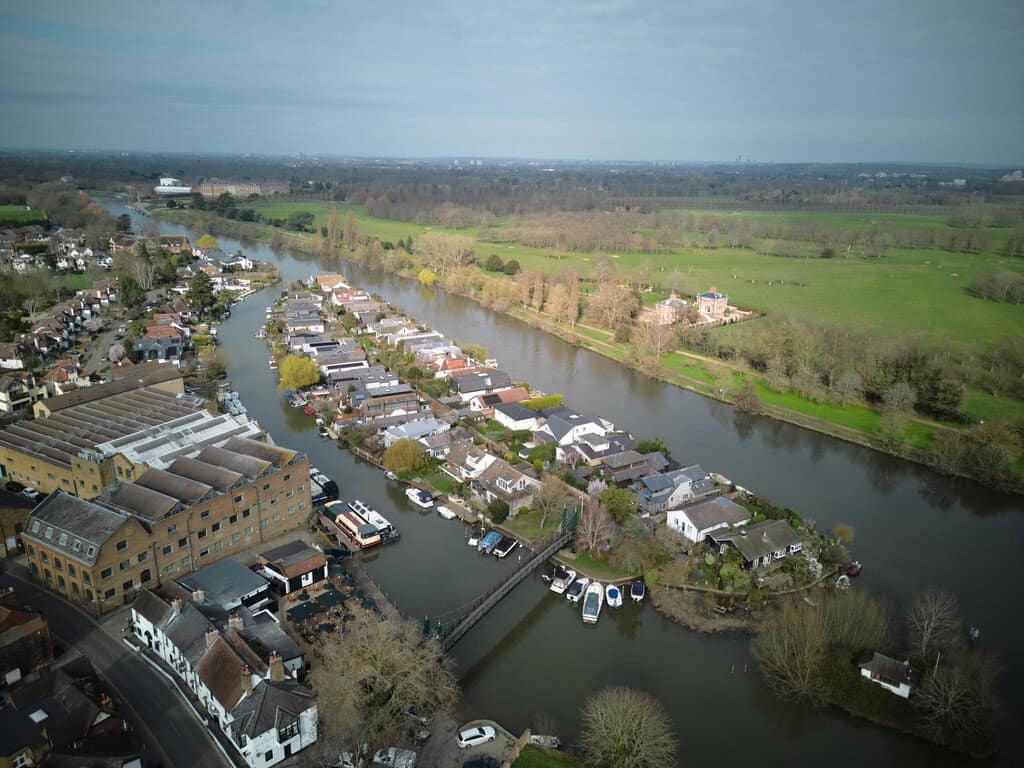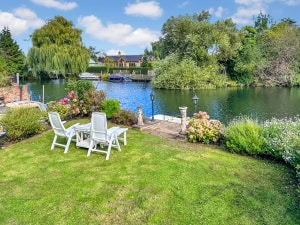

A couple stood on a mooring in Shepperton last spring, comparing a three-bed semi ten minutes from the station with a converted boathouse fifty yards from the water. The semi was the safer buy on paper. They chose the boathouse anyway, and they are not the first. We’ve watched this decision play out hundreds of times over the years, and the pattern holds: once someone has lived with the river at the end of the garden, a standard suburban plot rarely tempts them back.
That’s not a sales line. It’s 41 years of watching the same buyers return to us, sell one river property and go looking for the next, or send their children to us when it’s their turn to buy. Repeat clients are the best evidence we have that river living earns its keep once people understand what they’re taking on.
What Are the Different Ways to Live on the River?
“Riverside property” covers four quite different lifestyles, and mixing them up is the most common mistake we see in early buyer conversations.
A traditional riverside house sits on solid ground with a garden running down to the water, often with its own frontage or a shared right of access. You get a normal mortgage process and a normal sale, but proximity to the water brings flood exposure and, usually, a premium price. A towpath or tributary home sits a step back from the main river, on a backwater or feeder stream. It’s often quieter, sometimes cheaper, but still subject to many of the same drainage and access questions. A floating home is a different asset altogether: a houseboat, barge or widebeam on a mooring, bought largely for cash, with none of the stamp duty or standard conveyancing that applies to bricks and mortar. And island living means exactly that: a property reached by bridge, private boat or a short crossing, trading daily convenience for a genuinely different pace of life and a tight-knit neighbourhood.
Each has real upsides and real downsides. The riverside house gives you space and a normal legal process, at the cost of flood risk and insurance complexity. The floating home gives you the lowest entry cost and no stamp duty, at the cost of a cash-only purchase and ongoing vessel maintenance. Island life gives you a community most buyers never experience, at the cost of a commute that needs planning rather than assuming.
What Do We Actually Ask on a River Valuation?
Every riverside valuation we carry out starts with the same handful of questions, regardless of price bracket, because they determine whether a sale will run smoothly or stall at survey stage.
- How high off the ground does the property sit, and how far would water have to rise before it came inside?
- Is the mooring (if any) owned outright, leased, or informal, and for how long?
- Is the structure brick or timber, and how thick are the external walls? Timber and single-skin construction can make mortgage funds harder to raise.
- What does daily access actually involve: a normal road, a single-track lane, a pedestrian bridge, or a short boat crossing?
None of these questions are designed to talk anyone out of buying. They’re designed to make sure nobody discovers the answer for the first time at survey, three weeks before completion.
What Does River Living Cost in 2026?
Costs vary more on the river than in a standard housing estate, so specifics matter more than a general sense of “expect it to cost more.” A residential mooring for a 60ft boat in the London and South East area typically runs £8,000–£14,000 a year, with Thames long-term moorings ranging more widely, from around £2,000 up to £15,000 or more depending on location and lease terms. Most residential berths sit in council tax Band A, which usually works out at £1,200–£1,500 a year.
Insurance is where riverside buyers most often get an unwelcome surprise. Flood Re, the government-backed scheme that helps keep flood insurance affordable, does not cover homes built from 1 January 2009 onwards; that’s a deliberate policy choice to discourage further building on floodplains, not an oversight. Insurance for newer riverside homes is still available outside the scheme, but it tends to be dearer, harder to place with a mainstream insurer, and comes with higher excesses. We cover this in more depth in our flood risk and insurance guide, because it’s the question that decides more river purchases than any other.
Who Does River Life Suit, and Who Should Think Twice?
River living suits buyers who want a genuinely different setting and are willing to plan around it: checking tide and rainfall reports before a big storm, budgeting realistically for insurance, and accepting that the nearest supermarket might be a five-minute drive rather than a two-minute walk. It suits people who value quiet and a strong sense of neighbourhood over being on top of the shops.
It suits buyers less well if they need a fast, standard mortgage process with no surprises, if they’re not prepared for higher insurance costs on newer builds, or if daily convenience matters more to them than setting. There’s no shame in that; plenty of excellent buyers decide a garden overlooking the water from a safe distance suits them better than a garden that meets it directly.
If you’re weighing up a floating home specifically, our due-diligence checklist for buying on the water covers the mooring and vessel questions in detail. If island life is what’s drawing you, we’ve written a longer piece on what it’s actually like to own a Thames island home, based on what our own clients, and in one case our own family, have found living that way.
We’re members of The Property Ombudsman and Client Money Protect, which means every mooring, boat or riverside sale we handle carries the same protections as a standard house purchase. That’s worth knowing given how much of river conveyancing sits outside the usual process.
If any of this sounds like the life you’re after, the best next step is to tell us what you’re looking for. Register your search with us and we’ll match you against riverside, floating and island stock as it comes up, including property that never reaches the open market. Areas like Shepperton and Wraysbury are where most of this stock sits, and it moves quickly. You can also call us on 01784 557898 to talk through what you want before you start viewing.
Frequently asked questions
Is it more expensive to insure a house on the River Thames?
It can be, particularly for homes built from 2009 onwards, which are not covered by the Flood Re scheme. Insurance is still available outside Flood Re, but it tends to cost more, be harder to source, and carry a higher excess than for an equivalent inland property.
What’s the difference between a riverside house and a floating home?
A riverside house is real property on solid ground, bought with a standard mortgage and subject to stamp duty. A floating home, such as a houseboat or barge, is legally a chattel rather than real property, is normally bought in cash, and carries no stamp duty.
How much does a residential mooring on the Thames cost?
As of 2026, a residential mooring for a 60ft boat in the London and South East area typically costs £8,000 to £14,000 a year. Thames long-term moorings more broadly range from around £2,000 to £15,000 or more depending on location and lease terms.
Is living on a Thames island practical for commuting?
It takes more planning than a mainland commute, since access may involve a boat crossing or a footbridge, but it’s manageable once the routine is established, and many island residents say the trade-off is well worth it for the setting and community.
About the author
Robert King has spent 41 years in the property industry, most of it working with buyers and sellers in Surrey – Staines and Shepperton – and the surrounding Thames villages. He spent many years living on one of the Shepperton islands with his family, and now lives on the river in Staines. With a passion for water living, he holds an ICC (International Certificate of Competence) for driving leisure craft. Get in touch on 01784 557898 or info@absolute-homes.co.uk.